
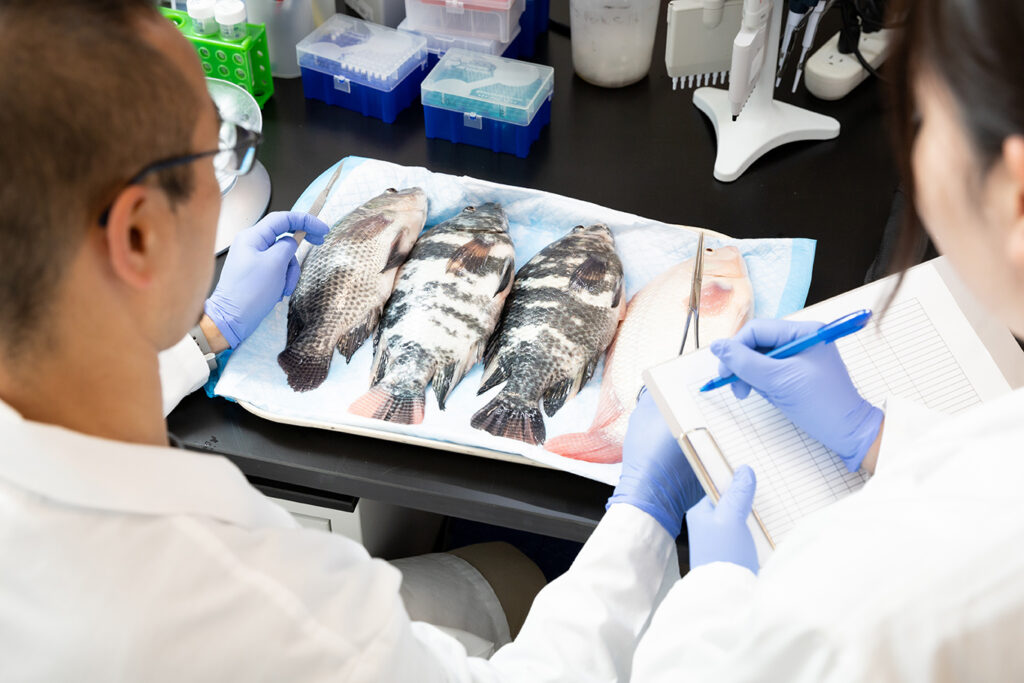
REVOLUTIONISING AQUACULTURE THROUGH GENETICS: THE ROLE OF GENETICS IN AQUACULTURE
Aquaculture has been evolving fast. Producers continue to be under growing pressure to deliver more – more efficiency, more resilience, more sustainability and often with fewer resources and tighter financial constraints. So how does genetics help?
Genetics isn’t just about growing better animals. It’s about building aquaculture systems that are robust, adaptable, long-term, and commercially viable. At CAT, we demonstrate that genetics is a powerful lever producers have to future-proof their operations, and we exist to help capitalise on that potential.
Why Genetics Matters in Aquaculture
Aquaculture breeding programs have been improving fish and shellfish for many years, using approaches similar to those in other agricultural industries. At their core, these programs involve choosing the best animals as parents and consistently selecting for traits that improve performance over time.
What makes aquaculture unique is the biology of aquatic species. Many produce large numbers of offspring are fertilised externally, and a multitude of external factors can cause a varying range in how quickly they grow and mature. This creates a significant opportunity to make meaningful improvements through well-designed breeding programs. Producers typically focus on traits such as faster growth and better feed efficiency, higher yields, improved survival and robustness, product quality, and, in some cases, sterility.
Our Mission
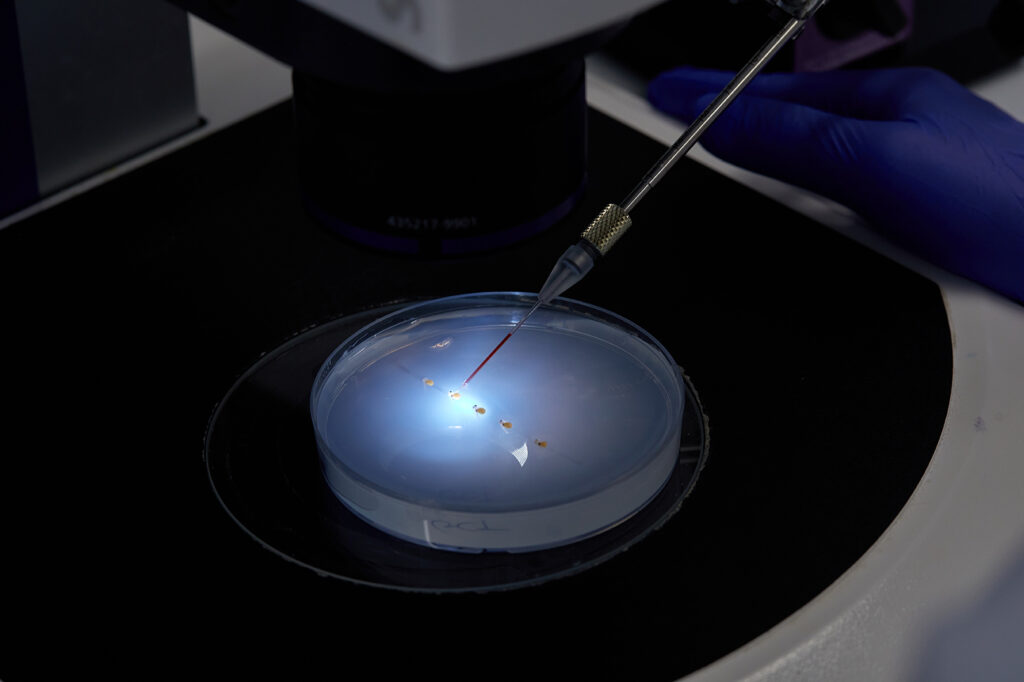
CAT’s mission is simple – deliver custom genetic solutions that improve efficiency, sustainability, and profitability for aquaculture producers, genetics companies, and researchers worldwide.
We don’t believe in providing only off-the-shelf answers, because every species, environment, and market is different. That’s why we design breeding programs around what matters most to each client, whether that’s growth, survival, disease resistance, robustness, product quality, or a combination of traits that drive real commercial impact. We’ll work with you to agree on a plan suited to your goals.
Our tailored approach to choosing the most appropriate genotyping tool(s) for your breeding strategy is shaped by each client’s specific needs. Complex programs, such as multi-trait genomic selection, require high-density markers, whereas simpler programs may require only low-density markers for relatedness and family assignment. By aligning cutting-edge genetic science with on-farm realities, we help producers make confident, data-driven decisions that deliver measurable results